The Problem
Before expanding into a new international market, we faced trademark issues. These issues affected our listings in the UK, which led to a drop in sales. Because of this, we shifted our focus from fast growth to profitability to protect the business.
Challenges like this are common when selling on Amazon. Long-term success depends on the ability to adapt and respond effectively.
We worked through this challenge while continuing to grow the business. We reduced the impact on sales, kept the US market strong and profitable, and improved efficiency in the UK market.
What Did We Do?
September – Fixing Problems and Saving Profit
The work completed in September created a strong foundation for recovery and long-term profitability in both marketplaces.
In the US, the focus was on improving performance. We increased ad spend on one main product and focused on keywords that were already performing well. We updated Sponsored Brands ads to highlight the new product and tested sending Sponsored Brands traffic to the brand store. We also launched targeted Brand Promotions. To improve efficiency, we paused ads that were not profitable and moved the budget to lower-cost ads with strong ACoS.
In the UK, the main goal was to reduce risk and stabilize profits. We launched remarketing campaigns using Sponsored Display Purchase ads for the new product. We increased spend on profitable targets, lowered bids on ads for a product that was already ranking well organically, and adjusted target ACoS across campaigns.
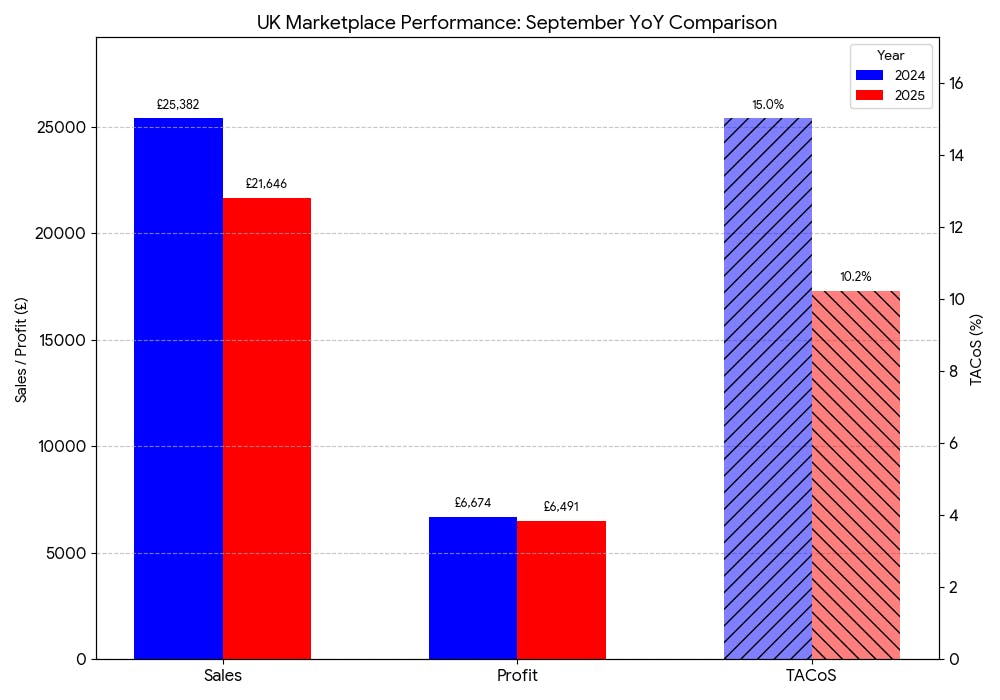
The results of this focused approach showed quickly. While total UK sales were lower compared to last year, overall profit remained stable. This was achieved by reducing ad spend and focusing on high-performing targets. As a result, TACoS dropped from 15% to 10%, showing that profitability and long-term growth were prioritized over short-term sales.
October: Getting Sales Back and Staying Smart
In October, the US set a goal to increase sales by 20% and achieved 19% of that target. The recovery plan focused on launching video ads for a key product and making sure top-performing keywords appeared in Top of Search placements. We closely monitored organic rankings and launched Sponsored Display retargeting campaigns. We also ran a Brand Promotion and updated the title and images for a third product. Throughout the month, we continued to cut inefficient ad spend and focused budgets on the most effective campaigns to drive profitable growth.
In the UK, the goals were to increase profit by 20% for the main refill product and reach £2,500 in sales for the new product. Both targets were fully achieved. With earlier listing issues resolved, sales began to return to normal. To support organic growth, average daily ad spend was reduced from £73 to £50, with most spend focused on Exact Match keywords. Key search terms remained highly visible, and performance metrics such as TACoS, ACoS, and profit were reviewed weekly. Bids were adjusted daily to maintain strong profitability.
November: Record Sales and Full Success
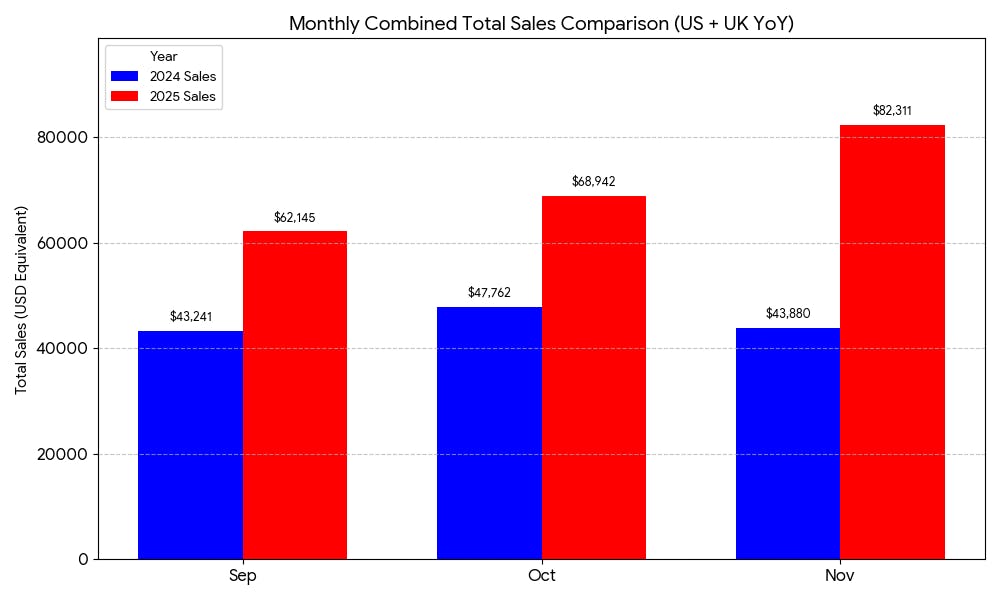
November was a strong month, with both the US and UK reaching their sales targets. In the US, we achieved several product-level goals. A core product and its variations saw strong sales growth, and another key product returned to profitability. This led to four record weeks in a row and the highest monthly sales to date, reaching $47k.
In the UK, sales for one product recovered to £5,000, and sales of the new product increased by 20%. The marketplace recorded two record weeks and its highest monthly sales on record.
Across both markets, our strategy focused on keeping top-performing products highly visible. We tested audience targeting, launched retargeting ads, and closely monitored organic rankings. We also ran a Brand Promotion, launched a video ad for the main consumable product, and made daily bid adjustments to support steady and profitable growth.
Content Experiment Win
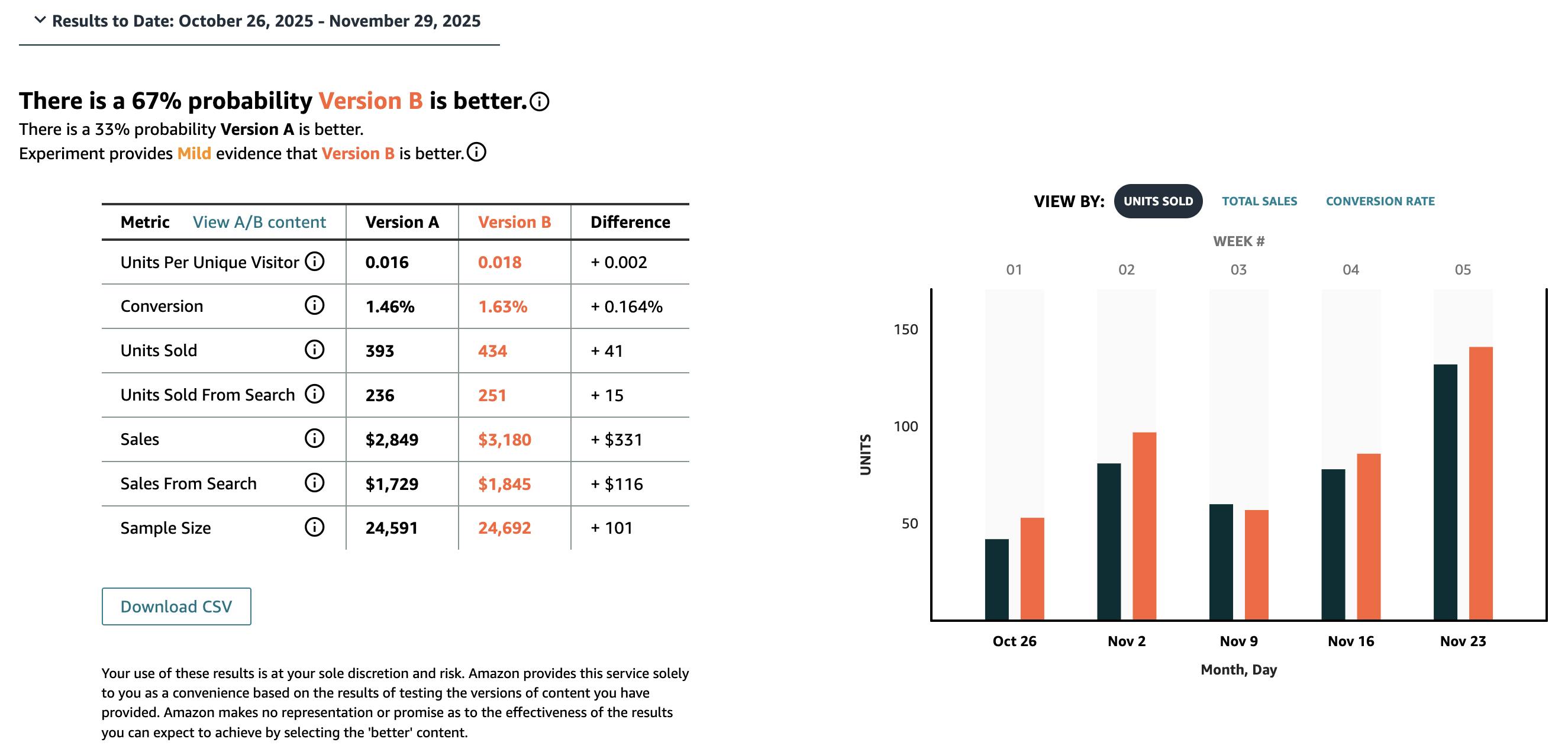
Over a four-week period, we ran an A/B test on the main product image to improve listing performance. The goal was to make the image clearer by removing distracting background elements and keeping the product as the main focus. We compared the original Version A with a cleaner, optimized Version B.